A Formal Feeling Comes

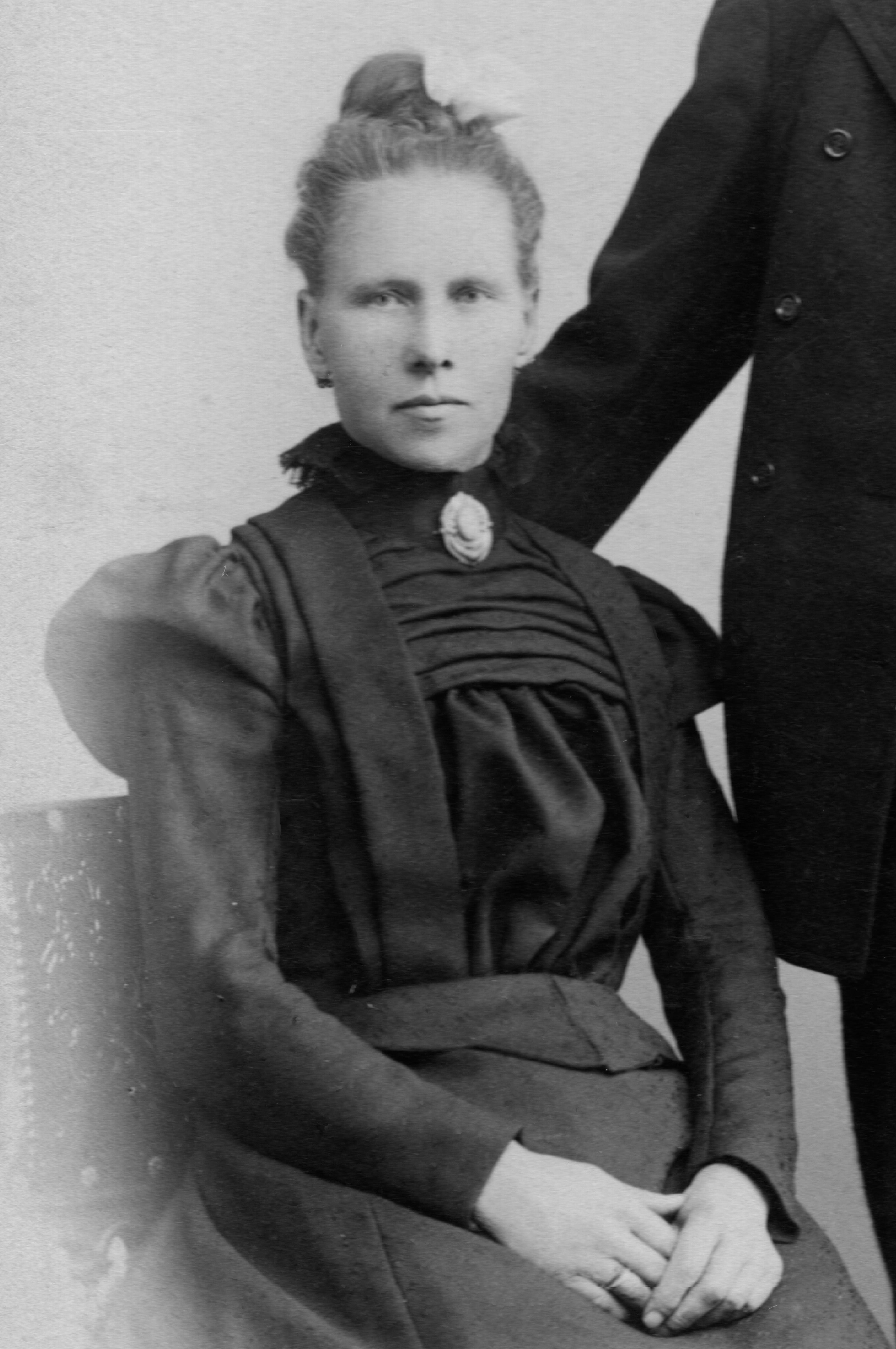
My parents’ wartime wedding in Valmiera, Latvia (1944).

As a new fiction writer, I wanted to learn everything that I could. That meant putting my work out for review before submitting it to literary journals. And only submitting to top journals (and the occasional new journal that caught my eye), lest I publish prematurely and delude myself that I was better than I actually was.

Fortunately, my early writing was deemed good enough to not only get me published in a few places that made me proud but also to elicit the sort of rejection letters from others that provided feedback on the specific strengths and weaknesses of a particular piece.

Interestingly, some seasoned editors’ comments did not differ much from those provided by some of my peers in the workshops that I attended. When I presented my first story, “Making Soup,” at my first workshop, Advanced Fiction at The Writer’s Center, nearly everyone liked my use of language and most had a hard time with my making the narrator a one-month-old infant. Then, there was this:

I think this is an interesting vignette of a family coping with the annoyances of war . . . This story seems to lack drama. Air raid sirens are dramatic, but there’s no sense that I should care about the characters. They seem bored by what’s happening, so why should the reader care about what is happening?

Fortunately, I was sufficiently experienced in other areas to be circumspect about such comments. A critique, after all, says at least as much about the person providing it as it does about the work itself. Clearly, most who came to such conclusions had never been in a war zone or had close contact with victims of war or displaced persons.

But I knew there was more to it than that. When people point out problems, what they say is amiss may not be so. But something, nevertheless, is. What I had wanted to convey but failed to do was similar to what Emily Dickinson had succeeded doing in three stanzas:

After great pain, a formal feeling comes –
The Nerves sit ceremonious, like Tombs –
The stiff Heart questions ‘was it He, that bore,’
And ‘Yesterday, or Centuries before’?

The Feet, mechanical, go round –
A Wooden way
Of Ground, or Air, or Ought –
Regardless grown,
A Quartz contentment, like a stone –

This is the Hour of Lead –
Remembered, if outlived,
As Freezing persons, recollect the Snow –
First – Chill – then Stupor – then the letting go –

I also wanted to show that once people lost everything they had, about all they had left was each other and their stories (and a few bad jokes). Being “dramatic,” I knew from my relatives, had little survival value. You had to keep your cool and maintain a low profile.

Instead of trying to satisfy readers, I made a deliberate effort to bring my style into line with the requirements of my characters. After “Making Soup” was named a finalist in a Glimmer Train contest but before it was published in TriQuarterly, I started “Winter Wonderland,” the most restrained, laconic piece that I have ever written.

That seemed to work. Selecting it for publication in Atticus Review, Editor-In-Chief Katrina Gray said in the introduction to the issue:

“Winter Wonderland” is a masterpiece. I’m not sure I’ve read another story that so brilliantly gives various perspectives of a suicide attempt, including the attempt-er herself, whose voice is not a crazy one, but steady, normal, kindhearted, and sensitive. The tone and structure are admirable, and the shifting points-of-view were conveyed effortlessly.

I still receive telling rejection letters. The one that arrived today concerned “That Dress,” a tale of a wedding that takes place in the Midwest of the Fifties but is undermined by one that occurred a decade before in war-torn Latvia. It is based in part on my parents’ 1944 wedding in Latvia. The editor said that the reviewers all liked it but felt that “there isn’t enough tension to keep the story moving.”

Maybe I will consult Carson McCullers’ The Member of the Wedding, which includes a girl about the same age as the one in my story and as much an “unjoined person” as mine. Who tries to insert herself into a marriage quite as much as my girl’s mother does. What I will not do is introduce hyped-up scenes that never could have occurred. If McCullers could create a compelling story in an atmosphere once described as both “numb and fevered,” I can learn to do so, as well.

That it could be a while before the piece is published does not concern me much. When it does, I will remember a remarkably bright but frequently disobliging Florentine oceanographer that I knew when I was working on NASA’s EOSDIS project. She had recently left to accept a new position, and we all wondered how that was going.

“How do they like you there?” one of us finally asked.

“They will,” Julietta replied.

What Causes Us to Cringe

An out-of-control baby carriage careens down the Odessa Stairs during a civilian massacre in Sergei Eisenstein’s 1925 film Battleship Potemkin.

Much has been made of the numbing effect of our constant exposure to catastrophe and carnage by modern media. Whatever this means for society as a whole, such systematic desensitization poses a particular problem for writers. If, as Franz Kafka wrote in 1904, “A book must be the axe for the frozen sea within us,” must the contemporary author resort to wielding an increasingly larger axe? Or are there more subtle ways to rouse the contemporary reader?

In 2008, I asked poet Judith McCombs to read early drafts of my story “Making Soup.” She made many careful comments in her delicate hand. In the margin next to my description of what the narrator, a ficticiously precocious one-month-old infant, had made of her mother’s recent nightmare, she wrote, “Eisenstein’s baby carriage.”

I immediately knew what it was that she meant I should do. While showing the extent of the tragedy–2000 dead and 3000 seriously wounded–an astute filmmaker such as Eisenstein likely knew that he also needed to add some small tragedy that his audiences could more readily grasp. I needed to do the same with my scene, the incomprehensible horror in Liepaja harbor that my family witnessed when we left Latvia in 1944. Since I already had an infant, I added a grandfather. This is how the revised version that was published read:

Farmers and those without gas for their vehicles arrived in horse-drawn contraptions. They tied the horses to posts and boarded ships. The horses tried to break free, rearing and neighing and foaming at the mouth. They had no water, no feed. Some effected an escape and ran crazed through the streets, trampling the dazed people who stood in their way.

Then the shelling, the fires began.

My father drove up in his cherry-red sports car. He tried to pull my mother in, but she fought him off. She shouted she had lost me, lost her mother.

As she turned from my father, a man who looked like her maternal grandfather emerged from the crowd. The same full beard and bushy eyebrows. He slipped on the blood-slicked cobblestones and was slowly, slowly falling, trying to protect something held in his arms. A dollhouse, the one he had built for her.

But it could hardly be him my mother, suddenly lucid, remembered. Her grandfather had died in his bed of influenza.

The old man hit the pavement with his hairy chin, and the dollhouse splintered beneath him on the street. The street that now looked as though it were paved with gravestones.

Since I am extremely visual, I continued to look to motion pictures for techniques to make readers cringe. (To good effect, of course.) I ruled out horror flicks and action films since they merely make me roll my eyes. But it seemed that there was something to be learned from thrillers, particularly the psychological, crime or mystery sort.

One consistently used technique seemed to be embedding the disturbing in the benign, increasing the impact by the contrast. Alfred Hitchock did it through bland settings–the blue skies and the yellow cornfield in his 1959 film North by Northwest–and humorous situations–the taxidermist attempting to save his swordfish in a struggle in his 1956 film The Man Who Knew Too Much. And both Terence Young and René Clément, in the 1967 film Wait Until Dark and the 1970 film Rider on the Rain, respectively, were able to get an actual visceral reaction from me by making me believe that the lady in each had evaded her assailant before delivering the devastating punch.

Similarly, my stories are often set in the most innocuous of places, the American Midwest. And are often told from the point of view of seemingly harmless characters: the infant, the child, the adolescent, even a Lutheran minister. The latter, for example, is forever slipping something into my novel Anna Noon that causes discomfort, as in this conversation that he has with his wife after taking an annoying call:

“Seems we’ve sponsored a spoiled brat,” he says, eying Winnie accusingly. “Babies aren’t the bundles of joy they’re believed to be, you know. Especially when they become bigger. Be grateful you were born barren.”

In this novel, in fact, I do everything possible to momentarily distract the reader from what lies right below the surface, including using a self-conscious postmodern style that signals–not to worry–this is merely a bit of fiction. In the preface, my unreliable narrator writes:

Vadim Voronin, who also knew Anna from that time, dismissed my story as nothing more than a fairy tale where an innocent comes close to being chopped up, cooked and served to a large number of guests, many of whom had accepted the invitation to dine merely because they were not otherwise engaged.

A few years ago, I asked poet Clarinda Harriss to help me compile a list of literary techniques used to make readers cringe. It was misplaced, but we can surely reconstitute it and get additional input, perhaps from you. There is enough material for several more posts.

Note: What initially prompted me to consider this matter more closely were words Caryn Coyle provided for “Concerning Craft: Caryn Coyle,” posted back when I was Online Editor at Little Patuxent Review:

I write what I fear. It is important to me that my work resonate with readers. A talented and valued mentor once told me that if I can make the reader cringe even one tenth as much as I did, I will have succeeded.

Aspects of My Father

My father in a studio in Riga, Latvia.
My father as a young man in a studio in Riga, Latvia.
My father among friends in Grand Rapids, Michigan.
My father as a middle-aged man, among friends in Grand Rapids, Michigan.
My father with his family in a Soho pub in London, England. (Photo: Ilse Munro)
My father as an older man with his family in a Soho pub in London, England. (Photo: Ilse Munro)

ILSE MUNRO