Category Archives: Migration

Migrants and Thugs

Baltimore poet Clarinda Harris at the launch of the 2013 Little Patuxent Review Music issue in Columbia, Maryland. (Photo: Linda Joy Burke)

One thing that Clarinda and I have a tendency to do is obsess about words. Understandable, you might say, since both write: one writes poetry, the other prose. Or, if you know us a bit better, you might say that, even for writers, we take it too far. Last autumn—or was it last fall?—we had a long discussion about how spelling could change the way that others perceive a description of, say, an overcast day. Revisiting that recently, Clarinda said, “And yeah, not only is ‘grey’ brownish and ‘gray’ bluish to me, but I have asked generations of writing students about the two spellings, and 100 percent have had a strong opinion.” So if such a neutral word can ignite such fervent feelings, then maybe everyone should obsess more about today’s overheated words. Particularly the important ones like “migrants” and “thugs.”

“Migrants” is my obsession since I once fled from conflict myself and am deeply concerned about the current global crisis. On the surface, it seems like a good word. Something all-encompassing that can be used while the specifics are sorted out. Even a word that taps into the basic tendency of populations to move from one location to another. Human beings migrateOther animals migrate, as well. Even plant life as rooted as forests migrates. The problem is that the word lumps together voluntary and forced population movement, which can be a fine distinction but often has profound implications. A better general term would be “displaced persons,” which was used for people like me during and after World War II and only refers to forced migration. Which makes me wonder whether governments now conveniently avoid the term because it has real meaning under international law.

You see, displaced persons who have crossed a border and fall under one of a number of international legal instruments are considered to be “refugees.” And, under the 1951 Refugee Convention, they have the right to seek asylum in the nation that they enter and to enjoy all the rights and benefits that exist therein. They are also exempt from penalties pertaining to illegal entry, provided that they promptly declare their presence, and are protected from forcible return to their country of origin. “Asylum-seekers,” by the way, are DPs who could be refugees but whose claims have not yet been properly evaluated. So that would be another entirely appropriate term to use these days.

But how people are seen can be as important as their legal status. Call displaced persons “migrants” and you run the risk transforming them into an invasive subhuman species that must be herded into pens and grudgingly tossed some food, as has happened in Hungary. Or, when granted human characteristics, turned into illegal immigrants that deserve to be beaten, arrested and deported, as has occurred there and in Slavic states. Even in the United States, where “migrant” is not only a noun but also an adjective, as in “migrant worker,” the word can be disparaging. Thus, someone as caring as Clarinda has to admit, “‘Migrant’ has taken on a specific class-related meaning for me. A ‘refugee’ can be a surgeon, a poet, a ballet dancer. A ‘migrant’ will be cleaning your toilets if there’s not enough fruit-picking to go around.”

Therefore, given how wrongly “migrants” are viewed and treated in a number of nations, it comes as no surprise that a dispirited Syrian student would sum it up for a reporter from The Guardian by saying:

You know Tupac? You know his song “Thug Life“? That’s us right now,” he laughs. “We’re living the Thug Life—we have sleeping bags, and we sleep on the floor.

Which brings me to Clarinda’s word, “thugs.” It has great relevance for her since she lives a few miles from Mondawmin Mall, where, earlier this year, protests of Freddie Gray’s death had turned sufficiently violent to receive international coverage. But both of us should have been more alert from the outset to the role that words played in the accompanying commentary. You see, a substantial number of people in leadership positions, including President Barak Obama, attributed the mayhem to “criminals” and “thugs.” I thought nothing of it, given his taste in music tends toward Etta James, except to note that the latter word was redundant and rather quaint. And sloppy for someone with a law degree who usually chooses words with great care.

It did not occur to me that “thugs” was possibly being used as a code word until I learned that it was the subject of considerable discussion in Clarinda’s neighborhood online chat room. “I weighed in several times on the meaning of ‘thug,’ she said, “which has regrettably taken on ‘black’ coloration. I knew from my father that it originated from the ‘Thuggee’ fraternity in India—highway robbers who worshiped Kali in the ‘goddess of murder’ guise. I always used it to mean cheap lower-tier criminals, white; it came in handy for skinheads. However, with my lifelong fascination with language, I understand that language changes, and you cannot make a word un-mean something it has come to mean. So yeah, in 2015 Baltimore, ‘thug’ is a racial slur.”

It is not so surprising that a word that started with one negative meaning would end up with another one. But it did come as a shock when “displaced person,” shortened to “DP,” was used pejoratively against my family and me and fellow Latvians after we arrived at our final destination, Grand Rapids, Michigan, since that term had no inherently negative connotations. It seems that when people are prejudiced against any segment of society, any word will do. Still, America has changed enough that I now proudly use DISPLACED PERSON as my website name. Perhaps that will also occur with some variant of “thug.” (But not the way it has with the likes of Thug Kitchen, mistakenly considered as cool.) Because there was a time when, through the artistry of the late Tupac Shakur, it was a word that filled a real void.

You see, Urban Dictionary defines “thug” as “someone who is going through struggles, has gone through struggles, and continues to live day by day with nothing for them.” It makes a point of differentiating “thug” from “gangster,” citing Shakur: “That boy ain’t a gangsta, fo’ sho.’  Look at how he walks, he’s a thug.  life. That’s the saddest face I’ve seen in all my life as a teen.” Viewed this way, a thug could be a kid from Sandtown who showed up to support Gray and took it too far. He could be that kid from Syria, who might soon retaliate for how he is being treated. Both could say what Shakur did in a 1996 interview:

I didn’t choose the thug life, the thug life chose me. All I’m trying to do is survive and make good out of the dirty, nasty unbelievable lifestyle that they gave me.

Note: For more on the current refugee crisis, see my two previous pieces, “Debt of Honor” and “Were You Ever a Refugee?” For more on the people that America calls “criminals,” see the piece that I wrote with Clarinda, “On Being Invisible: Our Nation’s Incarcerated,” for Little Patuxent Review.
Debt of Honor

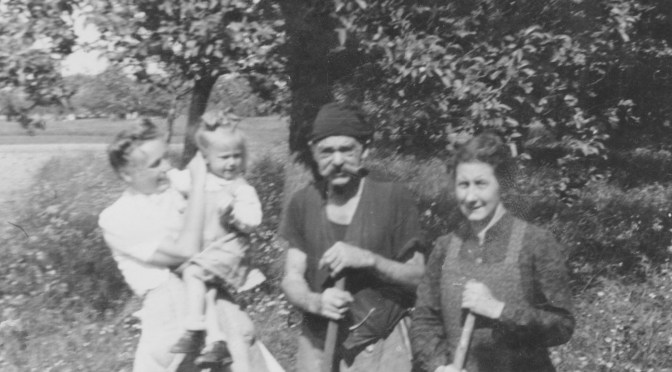
The Austrian farmer and his wife who turned their root cellar into a home for my family and me after we had fled the Soviet Army invading Latvia

I have long made the message of John Irving’s novel Cider House Rules part of my personal belief system: if you do not live in the cider house, you do not get to make the rules. So, as a native-born Latvian who has been a naturalized United States citizen since she was a small child, I have assiduously stayed out of Latvian politics. I have neither claimed Latvian citizenship nor voted in Latvian elections from afar, although that is my right. Attempting to influence situations from the sidelines that I do not understand from my own experience and that have no direct consequences for me appears—at best—somewhat unseemly.

But there is one situation where I do feel that I can have some say: Latvia’s resistance to giving refuge—over two years, no less—to a mere 250 of the 60 million or so people currently displaced by conflict simply because it is not ready to receive them. You see, this is the worst refugee crisis since World War II, when some 250, 000 refugees fled from Latvia to other countries. And my parents, my maternal grandmother and I were among them. Even though I was only about one month old when we drove to Liepāja, sailed to Danzig, then traveled by train to Altach, Austria, where we settled for about five years, I carry that harrowing experience with me to this day. And the stories that I heard from my relatives and their friends as I grew up, safe—at last—in the United States. In fact, this might be a situation that I understand better than current political leaders, since most are too young to have seen anything similar. (The president, Raimonds Vējonis, for example, was born some 20 years after I arrived in Austria.)

So I feel the need to tell them and their supporters that no nation has to be—and probably never really can be—ready to receive refugees, which they apparently believe is a precondition for what ordinary people might view as common decency. Austria most certainly was not ready for us. Its infrastructure and institutions had been devastated by war. It was occupied by the victorious Allied powers (the United States, Soviet Union, United Kingdom and France). Its economy was in shambles, and its people were near starvation. And it was overrun by foreigners. About 1.4 million of them, including roughly 650,000 refugees that settled there for good. Still, we were welcomed. And allowed to find housing and employment. (We refused to live in a displaced persons camp.) And it worked out well, since refugees are not that fussy. All we wanted was a place to live where bombs did not fall—a root cellar was fine—and a places to work that did not resemble Kazakhstan gulagsa hazardous hydroelectric plant was fine.

To tell them that, compared to postwar Austria, today’s Latvia looks close to ideal. Although the nation’s GDP growth rate has not yet returned to the levels seen prior to the recession, it is among the highest in Europe. And while the unemployment rate is not yet where it should be, there is a clear downward trend. In fact, about the only troubling trend is the negative population growth. The number of people has been decreasing in an alarming manner, making Latvia the sixth most rapidly shrinking country in the world. And the population loss is not proportional. University of Latvia professor Mihails Hazans, who has conducted significant migration studies, is quoted in a 2012 media piece as saying, “Most emigrants are young—about 80 percent of recent emigrants are under 35—hence the remaining population is ageing faster.” He refers to this trend as a “demographic disaster.” So it is hardly the case that Latvia could not support—nay, does not badly need—the young refugees who are clamoring to get in.

Alas, unlike my family and me, politicians are fussy. And often want what they cannot get. I find it funny that the sorts of refugees that the States wanted, as specified by the Displaced Persons Act of 1948, were primarily “people who previously engaged in agricultural pursuits and who will be employed in the United States in agricultural pursuits,” followed by “household, construction, clothing, and garment workers.” Precisely what our cohort was not. Latvian refugees, as noted by Ilze Zaķe in  American Latvians: Politics of a Refugee Community, “represented a selective stratum of inter-war Latvian society—mainly upper and middle classes with a very high proportion of politicians, public figures and intellectuals among them.” My father—if not my Rīga-born mother—could finesse that: though an urbane student of theology and philosophy, he was born on a Cēsis farm.

Latvia, similarly, wants to have a say in whom it will help. (Note both countries’ indifference to discrimination.) Prime Minister Laimdota Straujuma wants Christians, those who come as families and “educated people.” According a recap of a radio interview, she claims, “Accepting such people would be more understandable to the Latvian society.” Although she might not believe it, she might actually get at least some  of what she wants. While there are unlikely to be that many Christians in, for example, the current wave of Syrian refugees—the Syrian population is only about 10 percent Christian—it is painfully obvious that many come as families. And while Syria falls short of Latvia’s admirable 99.9 percent literacy rate (both sexes), its male rate of 86.0 is still in the top quartile. (The female rate is 73.6). But I would not be surprised if those now arriving on Europe’s doorstep are not a select sample much like Latvian refugees. Besides a strong back, it takes intelligence and resourcefulness to escape.

But, come to think of it, there is one thing that some Latvian politicians are not the least bit fussy about: international obligations. After the 1990 Declaration on the Restoration of Independence of the Republic of Latvia, by which it separated from the Soviet Union, Latvia hastened to join the United Nations and other entities. In 2004, it became part of the North Atlantic Treaty Organization and the European Union. All smart moves for a country the size of West Virginia that borders on the massive Russian Federation, which still has designs on its neighbor. However, with the improved stability and security that these valuable alliances bring come commitments. Alas, Latvia has managed to antagonize, to varying degrees, both the UN and the EU with its intransigence on at least two immigrant matters.

The UN, not to mention many human rights groups such as Amnesty International, is not all that happy with how Latvia has been handling the problem of nationality that arose for over 700,000 persons following the 1990 breakup of the Soviet Union. While something like a decade later Latvia acceded to the Human Rights Council’s Convention relating to the Status of Stateless Persons, a key legal instrument in the prevention and reduction of statelessness, the High Commissioner for Refugees still lists 262,802 stateless people as living there. (Statelessness puts people outside the protection of any nation and makes even everyday acts problematic.) But Latvia claims that it has none, having cleverly created the unique official status of “non-citizen,” thereby making the whole question of statelessness moot.

And while the EU seems to be giving Latvia a pass on the non-citizen solution, there is less sympathy for its stand on the current refugee crisis. Latvia’s allotment, calculated on the basis of population, economic strength, number of refugees already accepted and even unemployment, was initially 737. Latvia objected, citing extenuating circumstances such as the Soviet occupations from 1940 to 1941 and 1944 to 1991, which resulted in the number of ethnic Latvians being reduced to just over 60 percent; the absence of any in-place refugee integration program; and the limited capacity of Latvia’s sole refugee center, Mucenieki (50 people). Instead, it reluctantly offered to take 250 refugees over a two-year period as a one-time event. “Refusing to admit refugees would be like refusing to pay a bill,” said Inna Steinbuka, head of the European Commission Representation in Latvia.

Vaira Vīķe-Freiberga, former president of Latvia and former World War II refugee herself, had stronger words. In a radio interview, she decried the “political circus” that refugee policy discussions have become. “If we say that we are not able to ensure accommodation to such a small number of refugees and integrate them in our society,” she said, “then Latvia would sign a certificate of poverty, discrediting itself morally.” (By my count, 250 is 50 less than could be seated in the New Hall of the Latvian National Opera.) She also framed it as a matter of national security. Given the substantial number of ethnically Russian residents and the nature of Russia’s justification of aggression in Ukraine, it made sense for her to ominously add, “If Latvia declares that it is not able to integrate other people in their country, we are too weak and inable, then it is the white flag saying that somebody has to come and arrange things here.”  (A sobering sentiment that might be appreciated by a number of Latvia’s NATO partners.)

In my more mellow moments, I tell myself that Latvia is still a young nation. I add the two times it existed as an independent state and come up with about 50 years. And recall that that is about how long it took me to become a grownup. You see, it only really started after my father’s death, as I began to acknowledge the richness of my Latvian heritage, which had sometimes seemed little more than a source of alienation and sorrow. Then, after my mother’s death about a decade later, as I began to see the significance of the childhood that I spent as a refugee. And how—despite seemingly insurmountable obstacles—people from nations with no actual obligation to Latvia had helped my family and me survive. And that I had a debt of honor that I could only truly repay by helping other nations’ refugees, not Latvia’s alone.

So, I did volunteer work at the Baltimore branch of the International Rescue Committee, a nongovernmental organization founded in 1933 at Albert Einstein’s behest, because it offered emergency aid and long-term assistance to those displaced by war. And at the local immigrant assistance organization, FIRN. And put together a televised panel, “Immigration and Work,” for the League of Women Voters. And turned to writing fiction and essays to share my personal experience. And when the current refugee crisis was compared to the one precipitated by World War II, I saw little me in the faces of the Syrian children and my parents and grandmother in the arms that held them. And I saw Austria, which had been so kind to us, yet again, be so willing to hang out the welcome signs. And my native Latvia, from which 250,000 souls scattered to nearly every continent, become so selfish. And I knew that it was time for me to say something.

Austria: An Overwhelming Welcome (Source: UNHCR)

Note: For a more recent piece on Latvia’s evolving role in the current refugee crisis, see Kārlis Streips’ “Syrian Today, Latvian Tomorrow?”

Body Language

Twisted Sister’s Jay Jay French and Dee Snider performing at the 2014 See-Rock Festival in Unterpremstätten, Austria. (Photo: Alfred Nitsch)

Six months ago, I nearly died. My gallbladder succumbed to necrosis, gangrene spread through the surrounding area and I slipped into sepsis. No one—least of all me—understood what occurred until it was almost too late. You see, my body failed to use the accepted communication mode: intense localized pain. So even with a substantially elevated white cell count and the inability to keep down so much as a mango sliver, then even an ice chip, it seemed to suggest that I was merely run down and would be fine once I simplified my schedule.

So even after the telling ultrasound results came in and my physician booked me a spiffy private room in the surgical ward of the local Hopkins hospital’s new pavilion, it refused to act like someone sick. And I unquestioningly did the same.  I not only drove myself there but also stopped for gas because I was concerned about fuel-line freeze. Even enjoyed the bemused look on the clerk’s face when I said, “I have a reservation” and he, after extensive checking, said, “Well, so you do.” Which I only came to fully appreciate after learning that admissions to that ward mainly originate in the ER or elsewhere in the hospital.

The seriousness of my situation started to sink in during the subsequent days, when I was kept on IV fluids, nutrients and antibiotics—nothing by mouth—and simultaneously subjected to endless invasive tests, all of which was required before my body was deemed fit for surgery. Which, in contrast, occurred with surprising suddenness on a Sunday afternoon. And resulted not only in the two tiny holes that a laparoscopic cholecystectomy required but also in a gruesome gash across most of my midriff. “This is the worst case that I have ever seen,” my surprisingly personable surgeon said as I smiled sweetly.

Which, this time, was incongruent, since my body had started to voice real distress the previous day. At first, it only emitted a series of nearly inaudible whimpers as I lay shivering in the dark recovery room. That soon turned into uncontrollable sobbing when no one came to so much as lay a comforting hand on my shoulder. But once I woke in my own nice room, where I had taken a seasoned day nurse’s advice to pre-operatively tune my TV to the channel that not only played “classical” music but also showed soothing nature scenes cleverly synchronized with the time of day, I assumed that the worst was over. My caring, competent night nurse certainly gave that impression, enquiring only about whether my body had yet managed to pass gas.

As soon as my vital signs were stable, I was transferred to a remote nursing and rehabilitation center that was touted as top-rated. By a rough ride along dark roads—commercial medical transport vehicles resemble WWII field ambulances—that my body did not like in the least. But preferred to the unceremonious welcome it received, which featured the medical equivalent of a prison strip search, where every inch of my skin, every orifice was rigorously examined. Not for my benefit, I learned from the laconic explanation, but to protect the facility from future liability. It took forever since each bruise—and there were lots from all those anticoagulant injections—was carefully measured with a concentric-ring template of questionable cleanliness.

Still, I sought signs of humanity in the scowling male nurse who had just handled my sore body as though it were merely a slab of meat.

“Where are you from,” I asked.

“Africa,” he said.

“Africa is a huge continent,” I said. “Where in Africa?”

Nigeria,” he said.

“Americans usually do not bother to ask,” he added.

I wanted to tell him that I, too, was foreign-born. That, as a former war refugee, I maybe knew more about what he had experienced than most native-born Americans. But my body desperately wanted to be left alone. So I switched to insouciance, texting my primary physician, “Help! I am trapped in a chintz nightmare,” referring the prevalence of floral-patterned materials wherever I tried to rest my troubled eyes.

That only worked until morning. Once I had a chance to systematically survey my surroundings, both my body and I shrank back. You see, nothing there resembled the microcosm that I had previously admired in hospitals, where people of many races, nationalities and religions worked together in seeming harmony. Here, everyone charged with the care of the patients’ bodies—from physicians to nurses to nurse’s aides—had some degree of dark skin. And most had strong foreign accents, as well. The resulting fear—after failing to find other explanations—was that management had cynically selected only recent immigrants. Not for their qualifications but because they—as my DP parents once had—would work for the lowest allowable wages.

Strangely, we withdrew even more from the patients, predominantly white and proficient in English. While some staff, at least, seemed to sense the precariousness of their situation, most of the patients appeared blithely indifferent to theirs. Take my my roommate—please. A frail old lady with signs of dementia, she donned her perfectly pressed khakis and pretty hot-pink cable-knit sweater, applied her makeup and had her hair and nails done at the in-house salon. The fact that she had to sleep with a bed alarm activated to keep her from wandering at night seemed to cause her little concern. Each time she stirred even slightly, the damned thing woke only me. All I could do was press the buzzer and wait for my aide. And she was never in a hurry.

The manner in which we distanced ourselves initially differed.  My body made the first move, appalled that showers were limited to twice a week at night. It harangued the day nurse, and he gave in, getting me daily morning showers by re-classifying them as “occupational therapy,” much to the chagrin of the aide. Then, it categorically refused to dress, opting to pull two fresh hospital gowns—one laced in the front covered by another laced in the back, which served as a robe—over my clean anatomy. And rather than dealing with the discomfort of rolling a wheelchair out to the dining room, it opted to take meals by its bed. Even though they all consequently arrived cold.

Then, it became more emphatic. It took the dry omelette and greasy sausage, along with the limp toast and reconstituted juice that it had reluctantly ingested and spewed it out in an impressive spray. After surveying the effect with pride, it focused on my other end, with even more dramatic results. Thus, in contrast to what had occurred prior to my hospitalization, there was no question that the correct communication mode was used. My body screamed,”I am seriously ill.” My nice new roommate, who had no need of bed alarms, understood. She asked to be moved out immediately, which promptly occurred. But still the staff did not take me seriously. “It’s just your antibiotic,” my day nurse said. Until 18 hours later, when I offered the night nurse a clear choice: “Either you contact the on-call doctor now or I call 911.”

That caught management’s attention. By the time that the Director of Nursing arrived the next day, I had compiled a long list of complaints dating back to my arrival. Which was supported the following day by the fact that a widespread gastroenteritis outbreak was underway. Suddenly, there were hushed staff meetings and aides disinfecting everything with the same efficacy that, no doubt, led to the problem in the first place. And the facility was closed to new admissions. So I never got another roommate. But all of that came too late to placate either my body or me. With the help of an aluminum contraption—I could not bring myself to call it a “walker”—we engaged in an undertaking to essentially turn me into an aging Twisted Sister. Soon, I was stomping around singing “We’re Not Gonna Take It,” albeit sotto voce.

To enhance the effect, it refused to style the hair that was assiduously washed and blow-dried each day, allowing the ill-considered asymmetrical cut that I had been growing out to form a crazed gray frame for my face. And shed the facility-provided slipper-socks that went so well with the facility-provided knee-length gowns for the ankle-length black leather boots that I had previously kept in the closet. At last, I had a gut-level feel for why certain musicians looked the way that they did. This cut-up gut was fed up with what those who sought refuge in the States had to stomach to survive. And how it would only get worse once forced to contend with a health care system—and a society, for that matter—that sought to segregated its seniors. Some form of external expression was required. And the uglier, the better.

The backdrop proved to be perfect. In moderate Maryland, ice-storms of rare ferocity raged. (The February of my confinement was the Baltimore area’s second coldest on record. ) Seen through the facility’s wall-to-wall windows and juxtaposed with the stifling heat inside, it had an appropriately apocalyptic feel. Which was supported by incessant TV and social media updates. Images of Jordanian pilot Muadh al-Kasasbeh being burned to death in a cage, American hostage Kayla Mueller being confirmed dead and hundreds of Assyrian hostages being seized, all at the hands of the Islamic State of Iraq and the Levant, assaulted our senses. I could see how much of this might be combined, with me as the star, in a stunning music video.

Alas, those in my audience capable of appreciating this vision were few in number. One was an Albanian immigrant who had become a physician when opportunities to pursue her career in public health had been closed to her here. She honestly addressed my concerns. And not only confirmed that I, and subsequently others, had been sickened by the facility but was also able to intelligently discuss the barbaric oppression that both our native lands had experienced at the hands of the former Soviet Union, which now, in a different form, was playing out in the Middle East and rapidly expanding its reach.

“ISIL is as much a threat to civilization as Stalin once was,” I said.

“There was one good thing about communism, though,” she said.

“It removed religion as a valid excuse for committing atrocities.”

(While religion was banned under all communist rule,  Albania, which is Islamic and Christian, is now—by constitution—a secular country.)

With such limited success, the only option was to take my body and leave. Which was not as easy as you might think. We had to perform all sorts of stunts to prove we could carry out the “activities of daily living.” (We could not, but the staff was easy enough to fool.) Once home with the aluminum contraption, my body learned to negotiate treacherous sidewalks and stairs, then drive me where I needed to be. To more doctor’s appointments than you could imagine—those tests had revealed new, unrelated problems—and to physical therapy, from which I transitioned to Gentle Yoga for Tranquility, which, at least, is doing my body some good. The rest of me, alas, lags far behind. This piece, for example, is the first thing that I have written in six months.

Note: I do not ascribe to Cartesian dualism, knowing enough neuroscience to find fault with basic tenets.  However, I must admit that at times like this the phenomenology is such that the body seems to have a mind of its own.